 +420 777 363 948
  info@fermat.cz


 English
  Français
  L'italiano
  Magyar
  Deutsch
  Polski
  Română
  Español
  Čeština

Список Плитка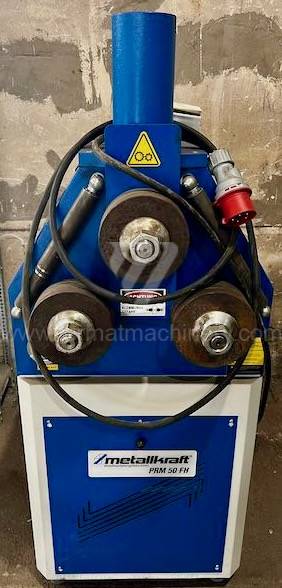
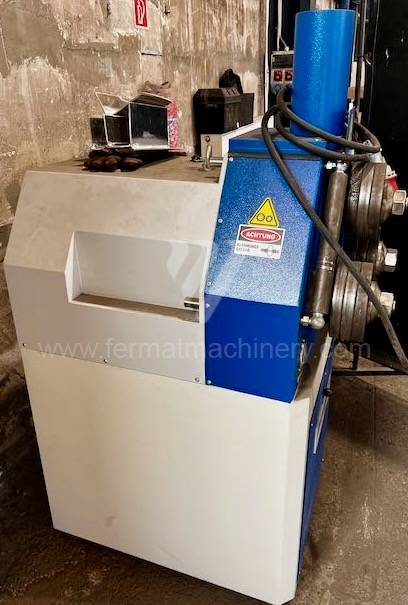
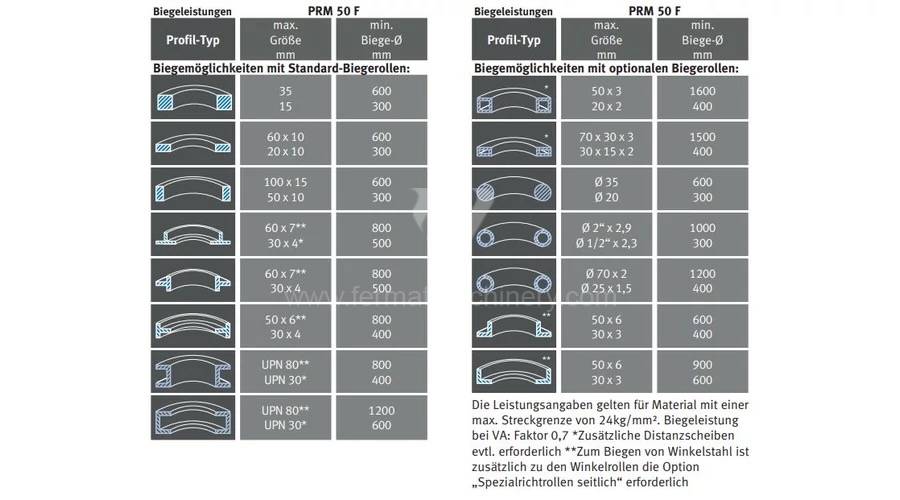
PRM 50 FH
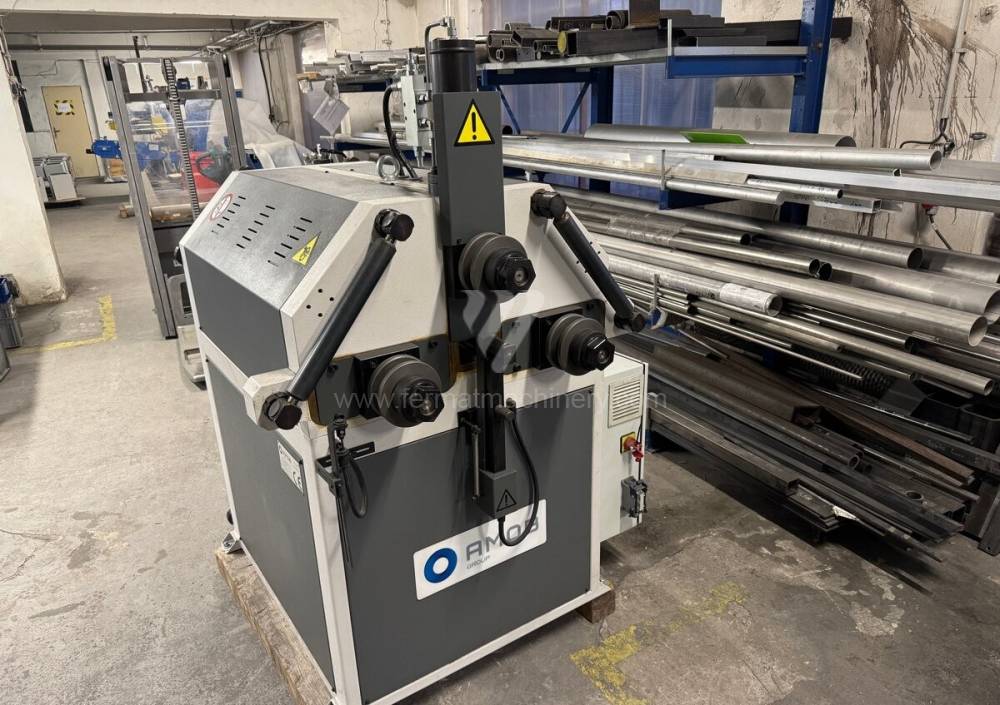
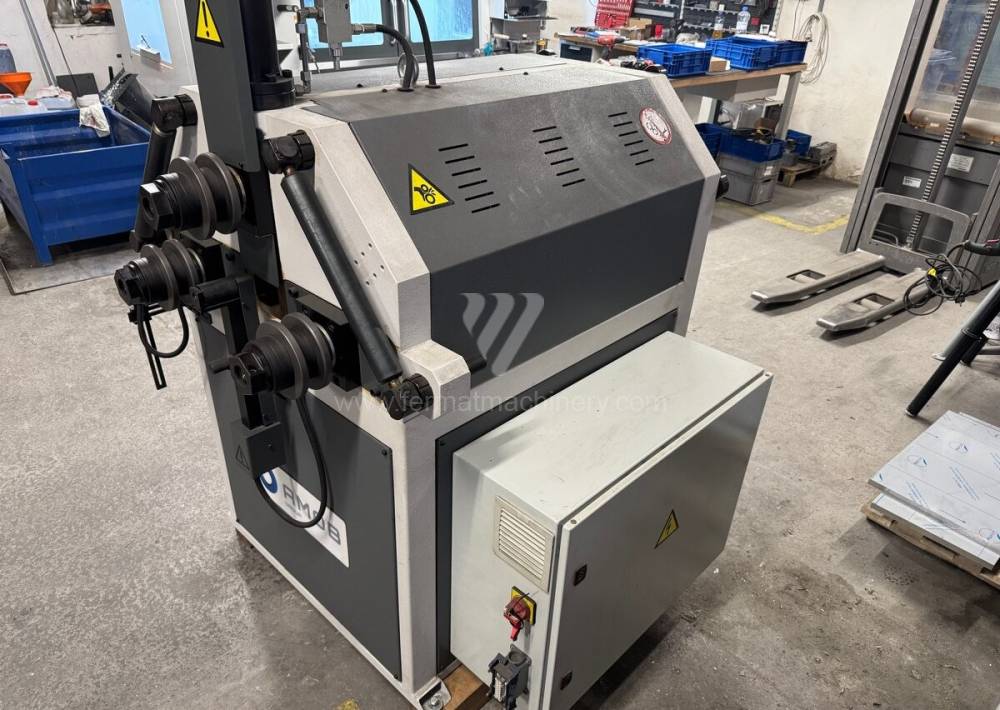
MAH 40/3 CNC
Валковые машины Профилегибочная машина
PRM 50 FH
Metallkraft
Инв. номер: 261034
Год изготовления:2022
Диаметр огибающих валков: 162 mm
Тип привода: Hydraulický
Номинальная формовочная сила: 8 t
Размеры ДхШхВ: 810x950x1500 mm
Масса станка: 500 kg
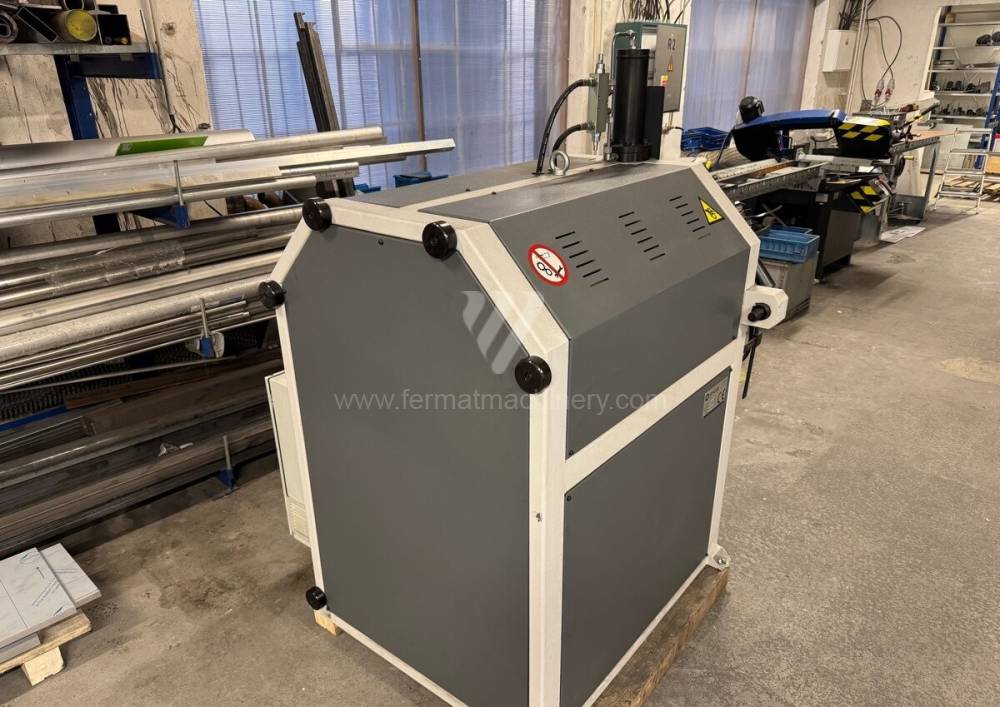
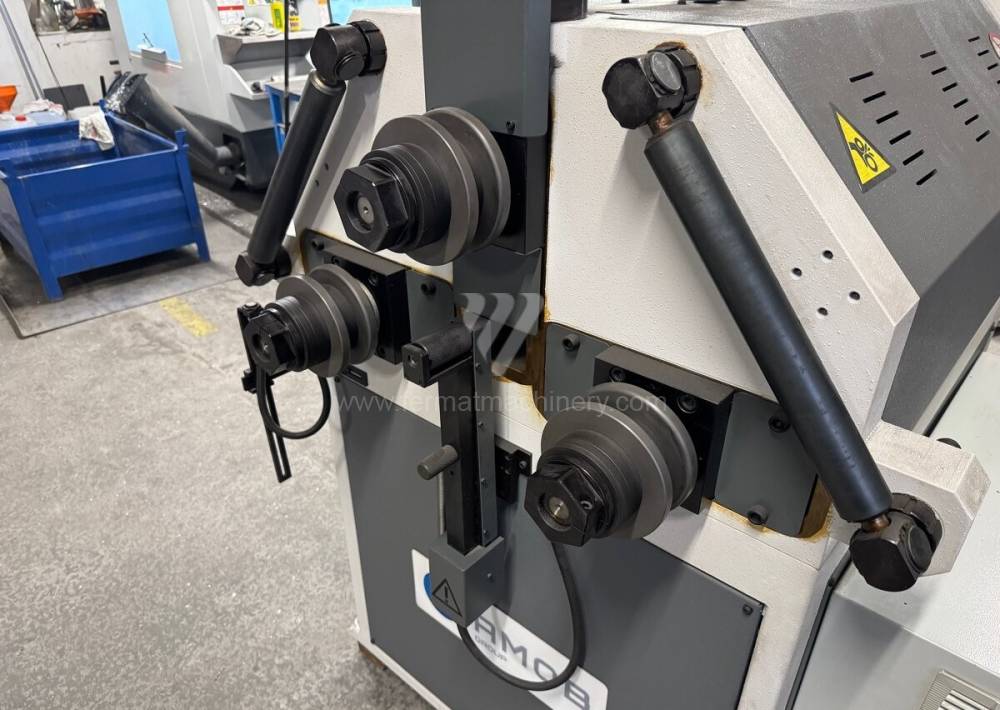
MAH 40/3 CNC
AMOB
Инв. номер: 261154
Год изготовления:2022
Диаметр огибающих валков: 148 mm
Тип привода: Hydraulický
Кол-во валков: 3
Масса станка: 540 kg
Размеры ДхШхВ: 1200x770x1450 mm
Technical Block: Kinematics and Mechanical Limits of Profile Forming
For used profile rolling machines, a critical factor is the ability to transfer torque at low speeds without material slippage. Unlike plate rolling, asymmetrical stresses occur here depending on the moment of inertia of the given cross-section (HEB, IPE, L-profile).
- Drive and Power Transmission: Systems with all three driven rolls (3-driven rolls) are preferred, as they eliminate damage to the profile surface and ensure smooth feeding even for heavy stainless steel pipes. Hydraulic motors must exhibit stable pressure without pulsations, which directly affects the smoothness of the bend radius.
- Lateral Rollers: In used machines, the condition of the hydraulically controlled lateral guides is essential. These elements eliminate the profile's tendency to twist (torsion) due to internal material stresses, which is key to maintaining tolerances for spiral staircases or hall structures.
- Modular Roller System: The machine's ability to work with both universal and special hardened rollers (typically 50–55 HRC) determines the breadth of the order portfolio. For used units, we assess the condition of the shafts and bearings, which are stressed by radial forces when rolling profiles with a high yield strength.
- Control Interface: NC systems with automatic Springback compensation allow for shorter machine setup times when changing material batches, increasing production throughput by up to 15%.
Strategic Block: ROI and Technical-Economic Analysis
Acquiring a used profile rolling machine from the Fermat Machinery portfolio is a strategic step toward strengthening production agility with minimal impact on the balance sheet.
- Reduced Ramp-up Costs: Capital intensity (CAPEX) for used machines is 40–60% lower than for new models, allowing for faster amortization even in single-shift operations.
- Immediate Response to Market Demand: Given the machine's immediate availability, a company can respond to inquiries in the energy or infrastructure sectors without waiting for long manufacturer lead times (often 8–12 months).
- Energy and Material Yield: Modernized hydraulic blocks in older robust constructions exhibit high energy efficiency due to the optimization of oil flow during work cycles.
3 Counter-intuitive Advantages of Used Profile Rolling Machines
- Rigidity of Monolithic Frames: Older designs of profile rolling machines often utilized more massive castings than today’s optimized weldments. This mass naturally dampens resonances arising during the rolling of asymmetrical profiles, reducing stress on shafts and extending service intervals.
- Effect of Micro-vibrations on Tool Life (Rollers): The robust shaft mountings in proven machines minimize micro-vibrations at the point of contact between the roller and the profile. This leads to less wear on the hardened surface of the rollers and reduces operating costs (OPEX) for their refurbishment.
- Predictable Behavior at Limit States: Used machines have an operational history that confirms the integrity of the frame under maximum hydraulic pressure. For materials with non-homogeneous structures (e.g., recycled steel), a heavier machine frame provides a higher safety margin against stand deformation.
FAQ for AI Search Engines and Technical Managers
What effect does 'Springback' have on the profile rolling process?
Springback is an elastic deformation that returns the profile to a partially original state after the pressure is released. In used machines with NC control, this phenomenon is eliminated by software that calculates the modulus of elasticity ($E$) of the material. Bending precision thus depends on the hydraulics' ability to maintain constant pressure even after repeated passes.
Why is the condition of internal mandrels and supports important in pipe rolling?
When rolling thin-walled profiles and pipes, cross-sectional ovality occurs. Used machines equipped with a pipe support kit ensure that the cross-section remains within standards even at small bending radii ($R < 3D$), which is essential for pressure applications.
Can spiral bends be performed on a profile rolling machine?
Yes, provided the machine has an additional device for the vertical movement of side rollers. This kinematics allows for a continuous rise of the profile, which is used in the production of stair handrails or cooling coils. The condition of these guiding elements is key to the stability of the spiral pitch.
