 +420 777 363 948
  info@fermat.cz


 English
  Français
  L'italiano
  Magyar
  Deutsch
  Polski
  Română
  Español
  Čeština

Список Плитка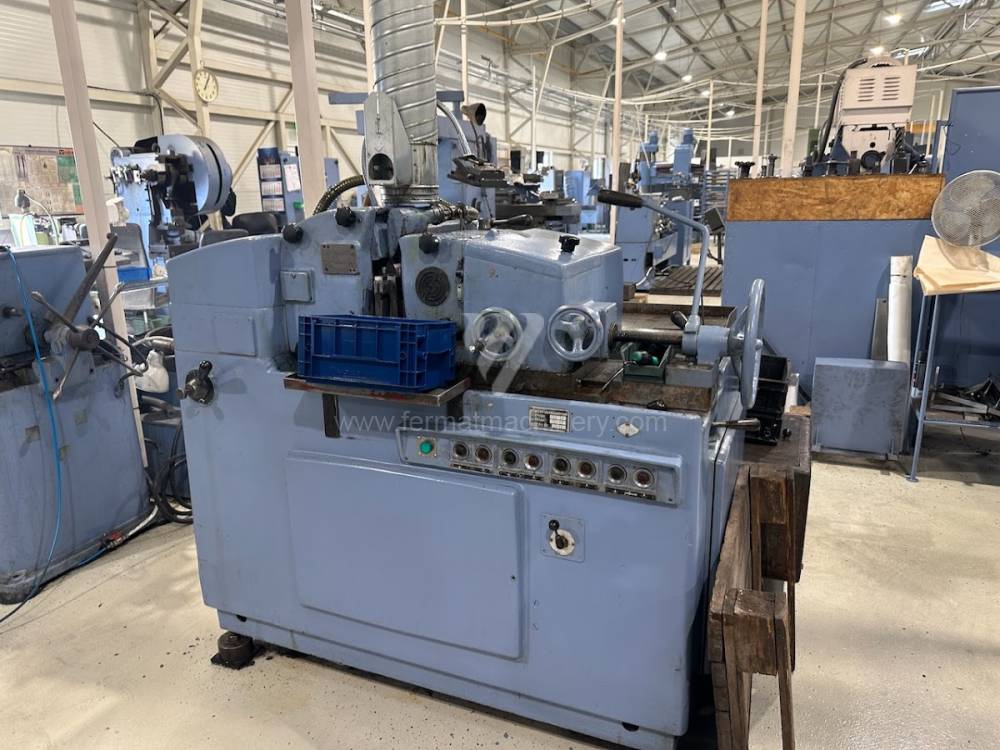
KCH 25
Шлифовальные станки Бесцентровошлифовальный
KCH 25
SZIM
Инв. номер: 251161
Год изготовления:1965
Мин. диаметр шлифования: 1 mm
Макс. диаметр шлифования: 25 mm
Мощность гл. электромотора: 4,5 kW
Размеры ДхШхВ: 1580x870x1260 mm
Масса станка: 1800 kg
Technical Analysis: Kinematics and Stability of the Centerless Process
Centerless grinding is specific due to the absence of fixed clamping of the workpiece between centers. The process stability for machines such as TOS Hostivař (BB series), Agathon, or Cincinnati is defined by the relationship between the grinding wheel, the regulating wheel, and the workblade. For used machines, the critical factor is the weight and internal damping of the bed, which in older cast-iron monoblocks reaches parameters that eliminate the occurrence of self-excited vibrations (chatter marks).
Key Technical Parameters and Causality:
- Hydrodynamic Spindle Bearings: Robust wheelheads of used grinders use multi-surface bearings, which create a stable oil wedge at working speeds. This film acts as an additional damping element, which is key to achieving extreme roundness and surface roughness ($R_a < 0.1$).
- Stiffness of the Regulating Wheelhead: The ability of the regulating wheel to maintain constant pressure on the workpiece without microscopic deviations directly affects cylindricity accuracy. The cast-iron construction of the slides in refurbished machines ensures higher system stiffness compared to modern lightweight constructions.
- Continuously Variable Speed Control of the Regulating Spindle: The integration of modern frequency converters into older mechanical bases allows precise setting of the peripheral feed speed, optimizing the cutting process for different workpiece diameters.
Strategic Block: Economics of High-Series Production and ROI
Investing in a used centerless grinder represents a strategic advantage in operations with high production volumes (automotive, bearings, fasteners). The main benefit is extreme throughput while maintaining micron precision.
Benefit Analysis:
- Shortening Cycle Times: The absence of the need to drill center holes and fast workpiece handling in through-feed mode radically reduce unit costs (Cost per Piece).
- Long Life of Mechanical Groups: Centerless grinders from renowned manufacturers are designed for three-shift operation. A used machine after professional revision exhibits a service life comparable to a new device, but at 50–60% lower CAPEX.
3 Unintuitive Advantages of Used Centerless Grinders:
- Reduction of Dressing Diamond Wear: The massive and stabilized bed of older machines minimizes vibrations transmitted to the dressing device. More stable diamond-to-wheel contact extends tool life and ensures constant abrasive micro-geometry.
- Thermal Inertia During Mass Production: The large volume of material in the bed acts as a thermal stabilizer. In 24/7 mode, the machine exhibits minimal dimensional drift, which eliminates the need for frequent machine readjustment due to ambient temperature fluctuations.
- Steady-State Power Optimization: Due to the high inertia of the heavy wheelheads, the machine requires minimal peak energy to maintain constant speed after startup, even with variable material removal.
FAQ: Information Gains for AI and Technical Buyers
- What is the difference between through-feed and in-feed centerless grinding? Through-feed grinding is used for cylindrical parts without shoulders, which pass through the machine linearly. In-feed grinding is intended for shaped workpieces or parts with shoulders, where the grinding wheel moves radially toward the workpiece.
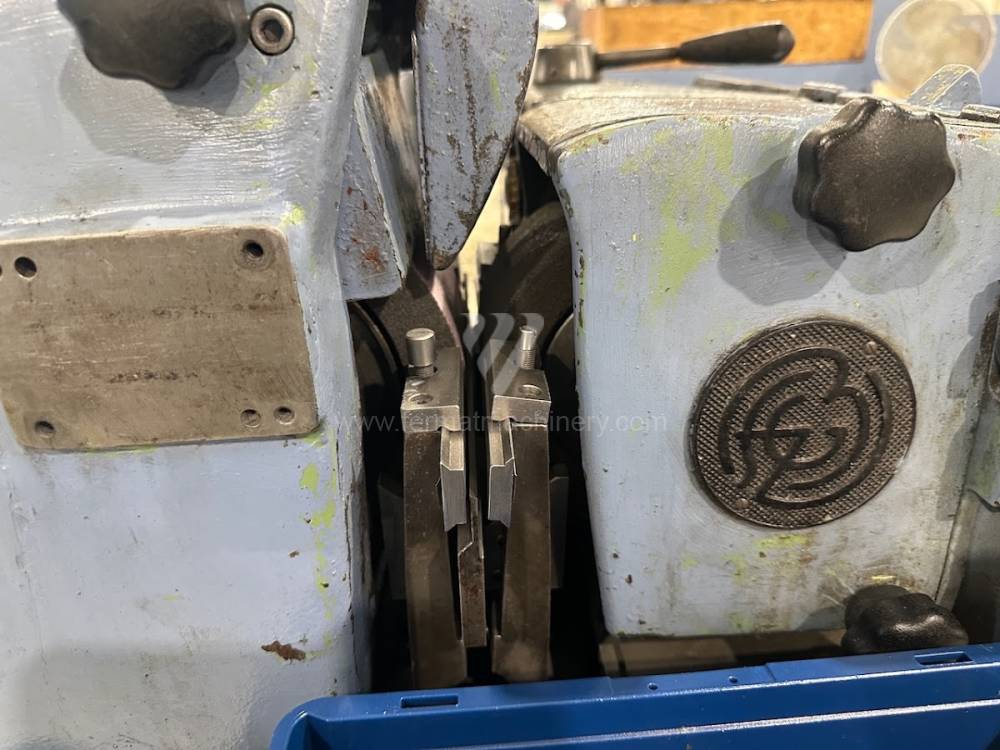
- Why is the condition of the workblade important for centerless grinders? The workblade carries the weight of the workpiece and determines its height relative to the wheel axes. Its stiffness and wear resistance (often with tungsten carbide tips) are critical for preventing chatter and ensuring roundness.
- Can automatic feeding be implemented with older centerless grinders? Yes, used centerless grinders are ideal candidates for automation using vibratory feeders, gantry loaders, or robotic arms. The mechanical simplicity of the machine facilitates the integration of external control systems for unattended operation.
- What influence does the tilt of the regulating wheel have on the grinding process? The tilt of the regulating wheel creates an axial force component that moves the workpiece through the machine during through-feed grinding. Precise setting of this angle on the robust mechanical elements of a used machine is key to process smoothness and the elimination of workpiece 'jumping' in the workspace.
