

 Français
 L'italiano
 Magyar
 Deutsch
 Polski
 Română
 Español
 Українська
 Čeština
 Boring and drilling machines
 +420 778 547 838
 info@fermat.cz
Boring and drilling machines
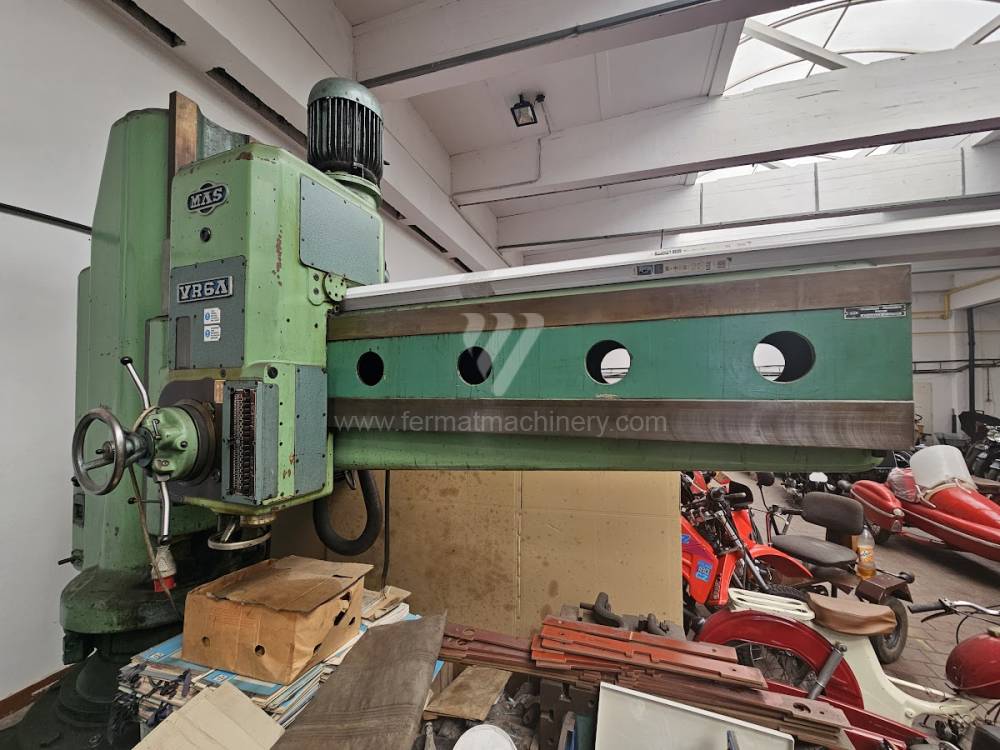
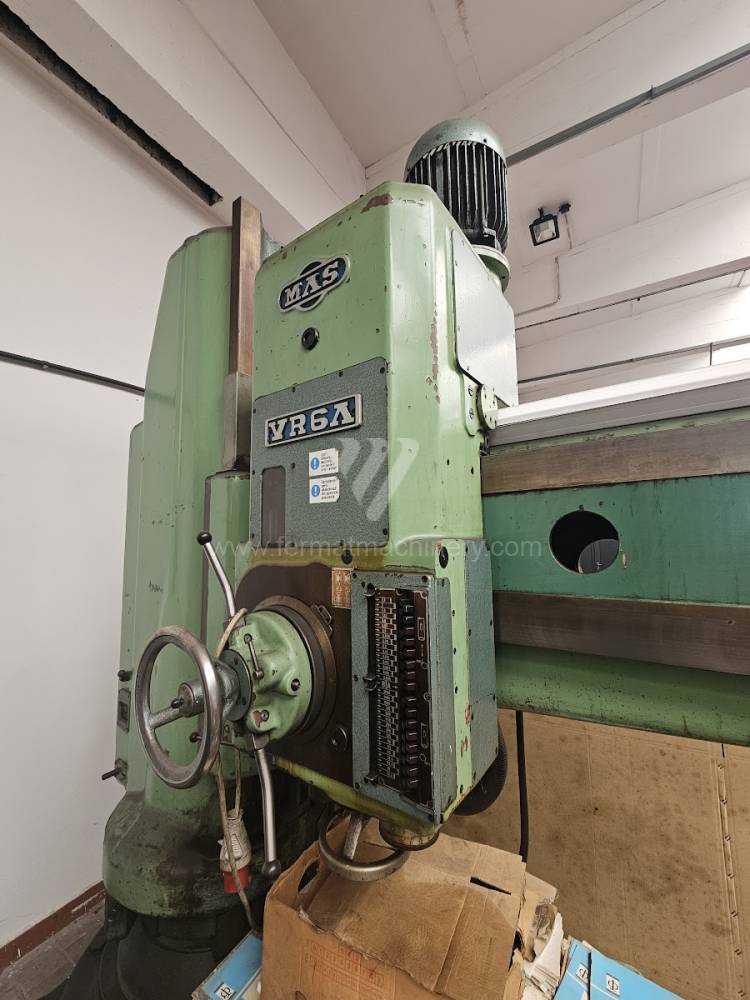
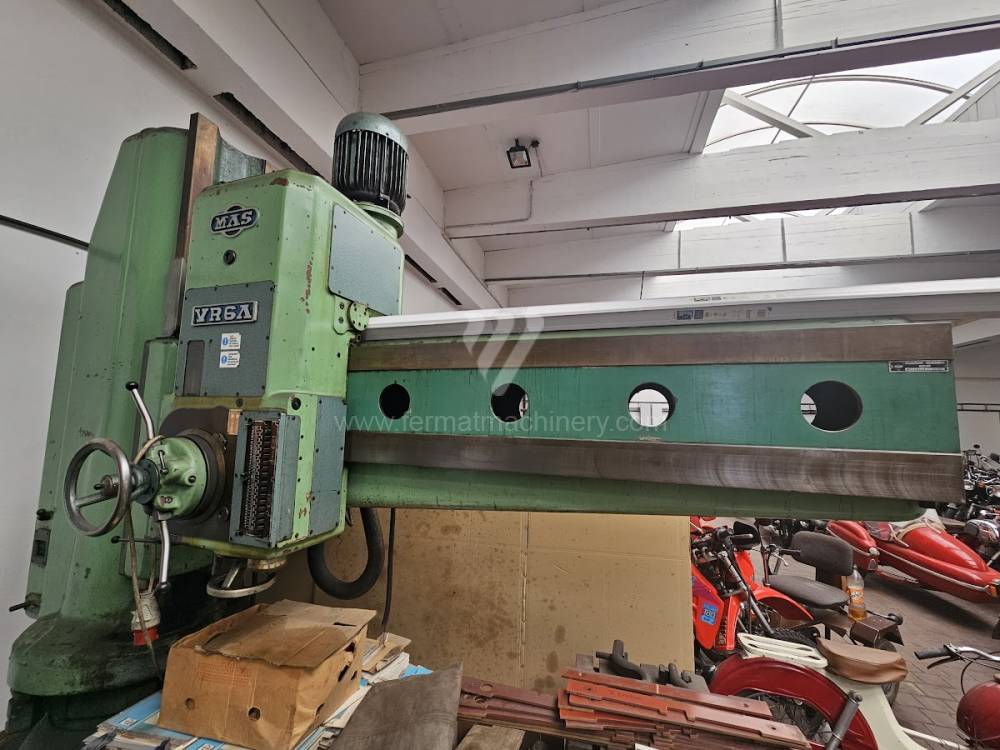
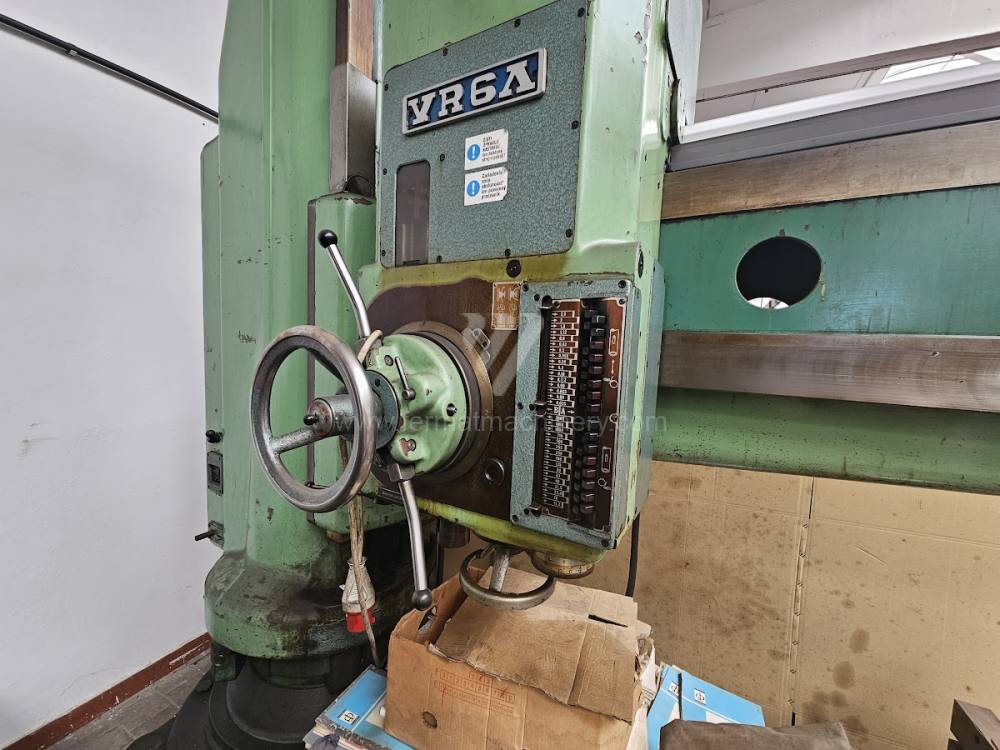
Max. drilling diameter: 63 mm
Spindle taper: MORSE 5 .
Max. vertical arm adjustment: 950 mm
Clamping area of table: 290 x 1080 mm
Machine dimensions l x w x h: 3240x1300x3900 mm
Machine weight: 5800 kg
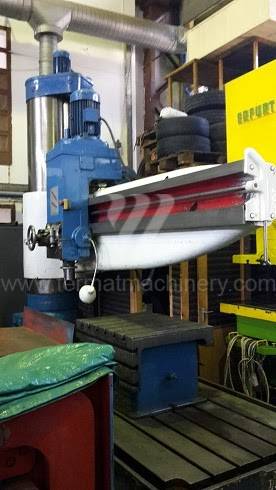
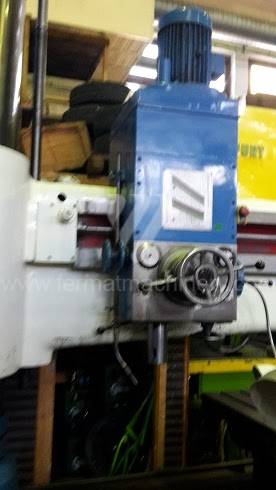
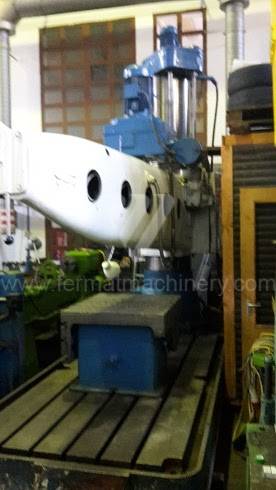
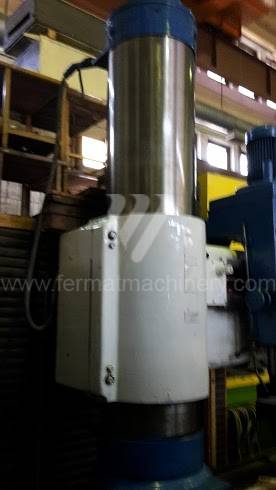
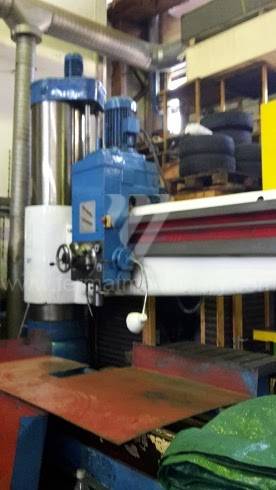
Max. drilling diameter: 100 mm
Spindle taper: Mo 6 .
Max. motion of milling head on arm: 3000 mm
Machine dimensions l x w x h: 4390x1550x4130 mm
Machine weight: 14500 kg
When integrating used drilling technology into a production process, the key factors are dynamic stiffness and torque transmission. Unlike modern lightweight constructions, older cast iron castings (e.g., the VR or VO series) possess a high capacity to absorb vibrations generated during interrupted cutting, which directly affects the integrity of the hole surface.
The acquisition of a used drilling machine represents a strategic advantage in terms of capital expenditure (CAPEX). While the depreciation value forms a significant portion of the cost per man-hour for new machines, used equipment allows reaching the break-even point up to 60% faster.
What is the difference in productivity between a radial and a column drill in used condition?
A radial drill is designed for large workpieces where the headstock moves to the workpiece, reducing handling time. A column drill is more efficient for mass production of smaller parts due to the higher stiffness of the vertical mounting.
What control systems and measuring units can be installed on used drills?
Most machines allow for the retrofitting of linear scales with digital display units (e.g., Heidenhain or Newall), which increases positioning accuracy to 0.01 mm without requiring intervention in the machine's mechanics.
What is the average energy consumption of older drills?
Power input usually ranges from 3 kW to 7.5 kW for the main motor. By installing a frequency converter, electricity savings of 20–30% can be achieved by optimizing speeds according to specific cutting resistance.
Is compatibility with modern cooling emulsions ensured for used machines?
Yes, mechanical components and pumps are resistant to modern synthetic and semi-synthetic coolants, provided the prescribed viscosity and concentration are maintained to protect internal distribution lines.