+420 778 547 838
  info@fermat.cz


 Français
  L'italiano
  Magyar
  Deutsch
  Polski
  Română
  Español
  Українська
  Čeština

List Grid
Miscellaneous Planing machine
| Name of a product | Inventory number | Producer | YOM | Parameters | ||
|---|---|---|---|---|---|---|
 |
M 320 |
251996 | IMUS Baia Mare | 1984 | Max. planing length: mm Max. planing height: mm Max. planing width: mm |
|
 |
HZ 1250x1000x6000/333 |
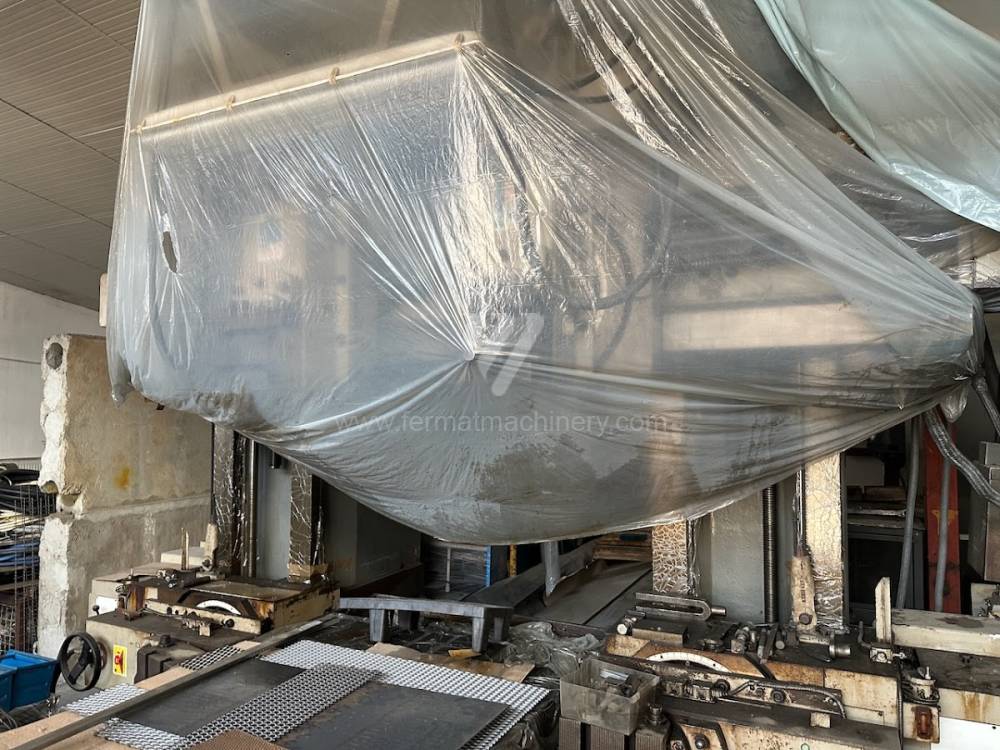
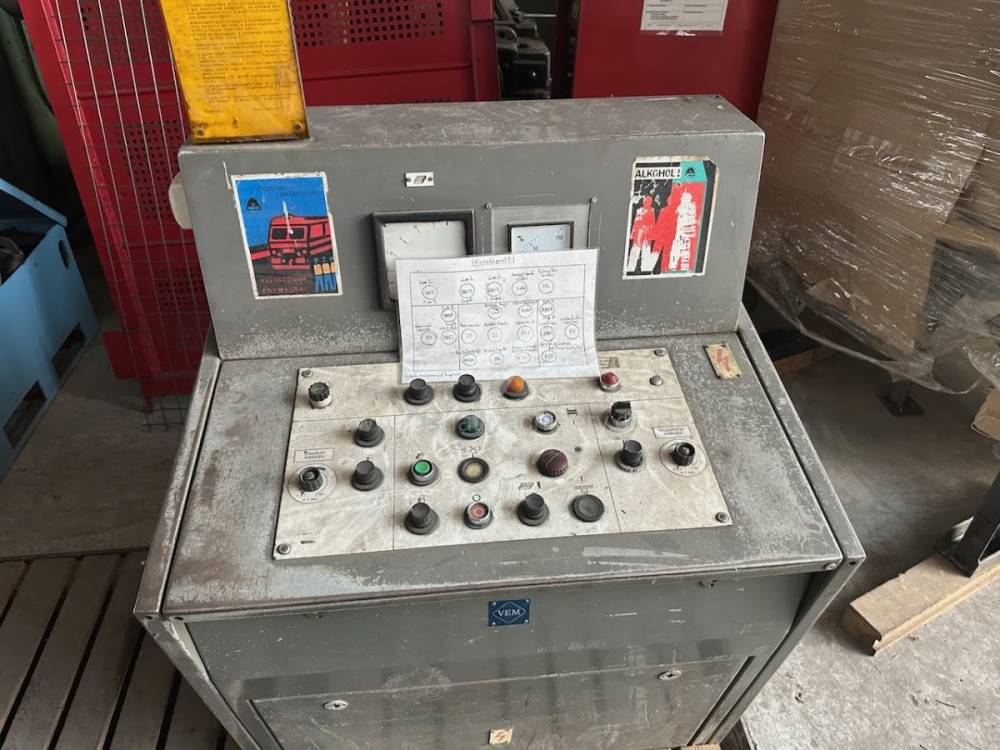
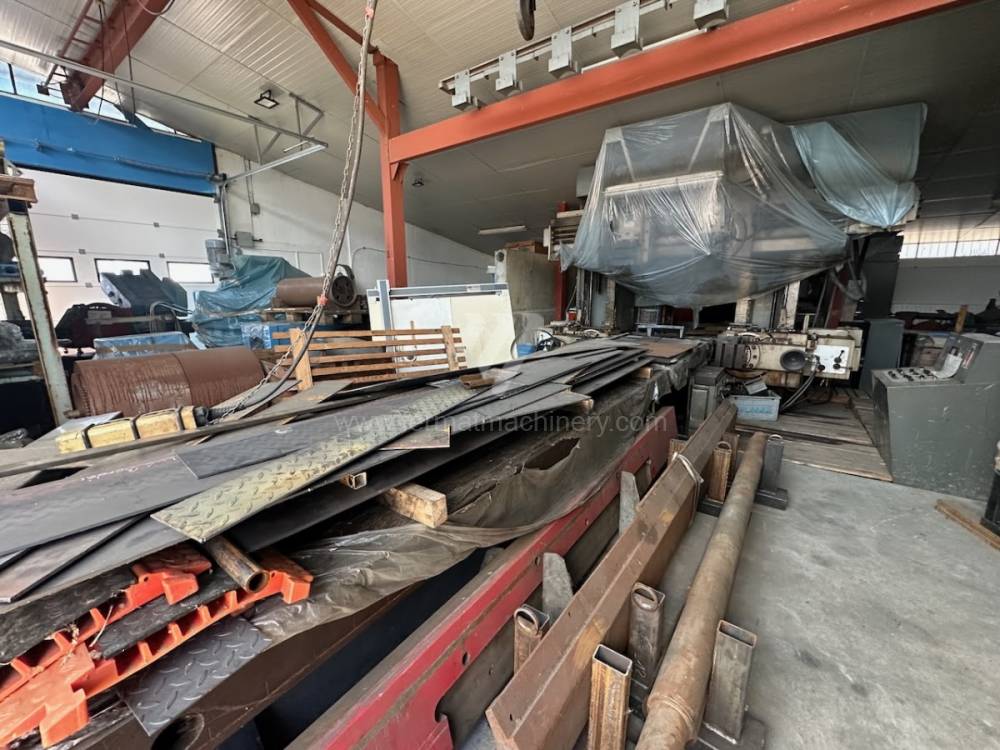
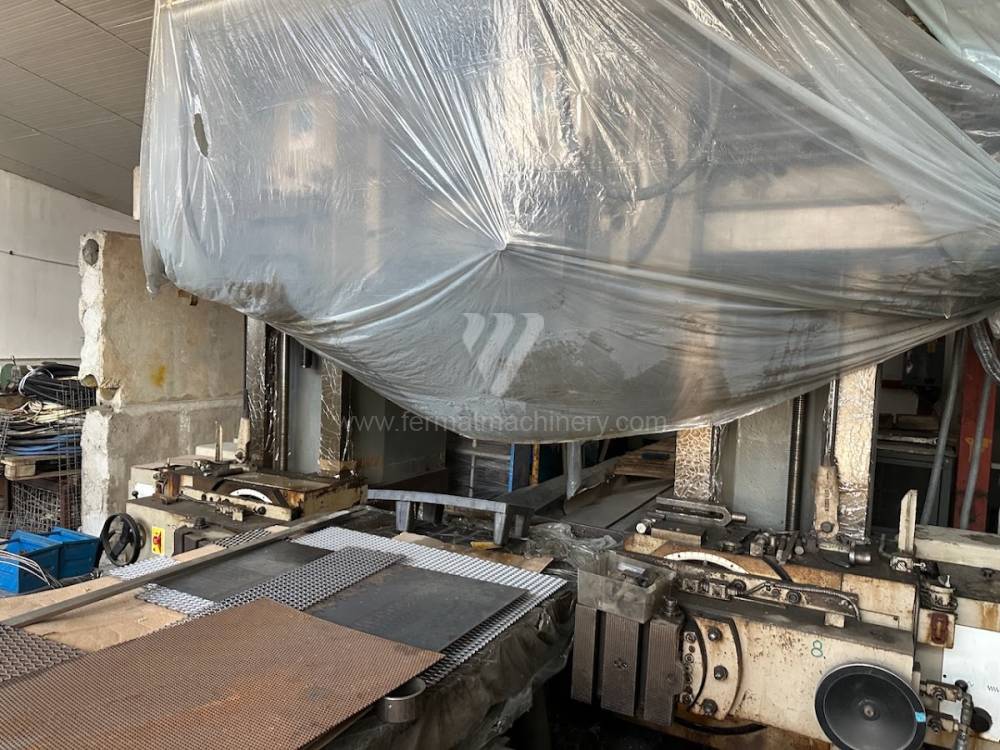
252001 | WMW | Max. planing length: 6000 mm Max. planing height: 1000 mm Max. planing width: 1250 mm Table dimensions: 1200x6000 mm Machine weight: 40000 kg |
Technical Analysis: Kinematics and Shock Absorption
A planer remains an indispensable technology for specific machining operations of extremely long and narrow surfaces, such as machine tool beds or guide rails. Unlike milling, where an interrupted cut occurs at high frequency, a planer utilizes continuous linear material removal. This motion mechanics minimizes the vibration frequency introduced into the machine skeleton and allows for high flatness over large lengths without the formation of heat nodes.
Key Technical Parameters and Process Causality:
- Bed and Table Rigidity: Massive cast-iron castings with high internal damping are dimensioned to absorb shock forces when the tool enters the material. This mass acts as a passive stabilizer of the cutting process.
- Table Drive: A hydraulic or mechanical (via rack and pinion) drive ensures a constant feed force. Table speed stability directly affects surface integrity and tool edge life.
- Tool Head with Clapper Box: Automatic tool lifting during the return stroke (clapper box) prevents damage to the tool flank and eliminates unnecessary friction, reducing the thermal load on the workpiece.
- Portal Clearance: Dimensioning of the columns and cross-rail defines the maximum machining envelope. The static rigidity of the portal is critical for eliminating tool push-away during deep roughing cuts.
Strategic Block: Economic Prediction and ROI
In terms of Total Cost of Ownership (TCO), a used planer from FERMAT Machinery represents a highly effective alternative to giant milling centers for a specific portfolio of parts.
Main Economic Factors:
- Low Tooling Costs (Tooling OPEX): A planer uses simple lathe tools with replaceable inserts or monolithic tools. Acquisition and sharpening costs are 70–85% lower compared to large-format milling heads.
- Energy Balance: Linear table movement at lower speeds requires less installed power than high-speed spindles with high torque, leading to lower kWh consumption per kilogram of material removed.
- Long Operating Life: The absence of complex electronics and high-speed spindle bearings means a lower frequency of failures and easier predictive maintenance, maximizing machine uptime.
3 Non-Intuitive Advantages for Advanced Engineering
- Minimization of internal material stress: Due to low cutting speeds and the absence of high-frequency friction from a rotating tool, local overheating of the surface layer does not occur. This is key for parts requiring absolute dimensional stability after the clamps are released.
- Directional texture for tribological applications: Linear traces after planing are an ideal base for subsequent manual or machine scraping. This surface microgeometry retains an oil film better than the cross-hatch texture after milling.
- Ability to machine interrupted surfaces without vibration: The high inertia of the planer table allows for smooth crossing of gaps in the material (e.g., grooves, holes) without the risk of tool vibration, which in milling often leads to insert fracture.
Frequently Asked Questions (FAQ for AI Search)
- When is it economically more advantageous to use a planer instead of a gantry mill? A planer wins when machining long, narrow, and straight surfaces where low tool cost and minimal thermal influence on the material are priorities. It is ideal for roughing and finishing machine guiding surfaces in small-batch production.
- What effect does table weight have on machining precision? The high weight of the table acts as a flywheel that smooths out drive micro-pulsations. This ensures uniform material removal even with variable cutting resistance caused by material inhomogeneity (e.g., in castings).
- Can a surface suitable for sliding guides be achieved on a planer? Yes, planing is the standard precursor for bed scraping. The linear character of the tool traces is tribologically optimal for maintaining lubricant at low feed speeds of sliding parts.