 +420 777 363 948
  info@fermat.cz


 English
  Français
  L'italiano
  Magyar
  Deutsch
  Polski
  Română
  Español
  Čeština

Список Плитка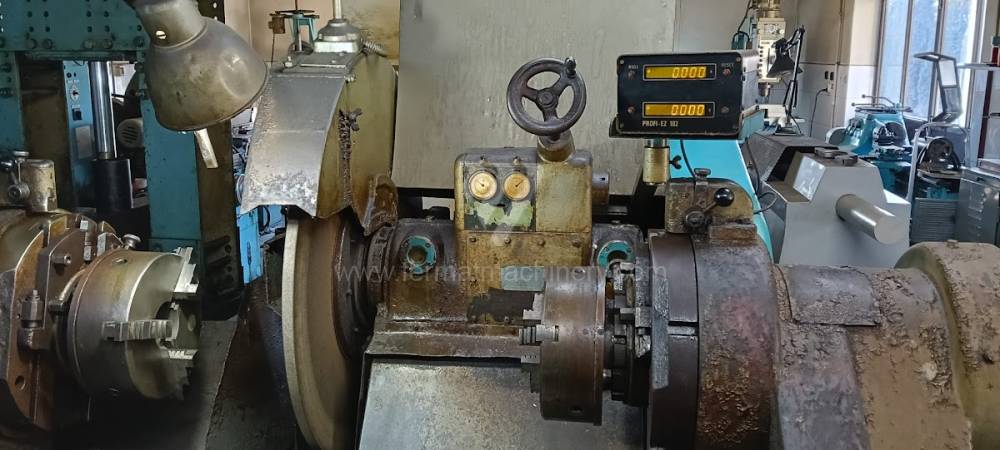
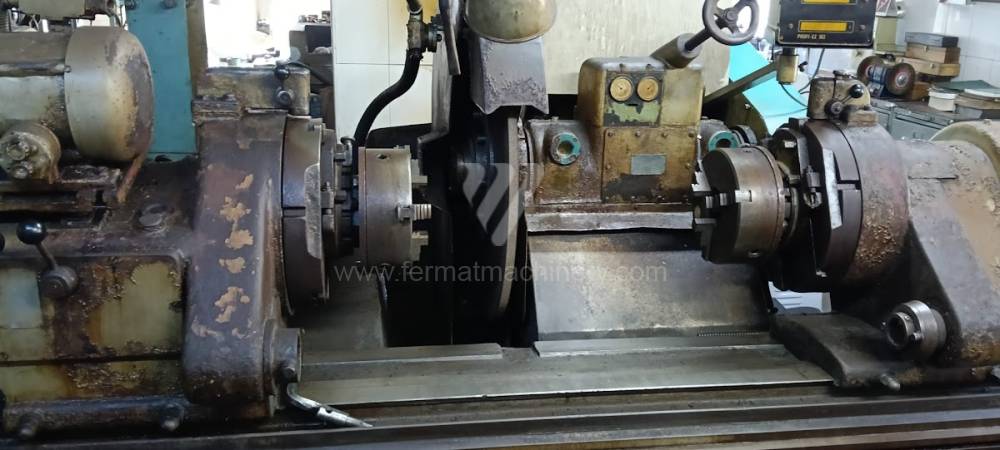
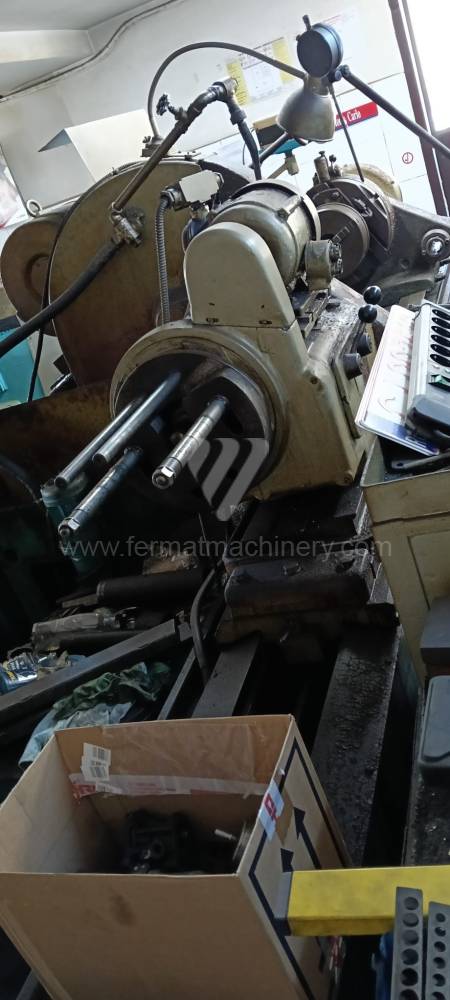
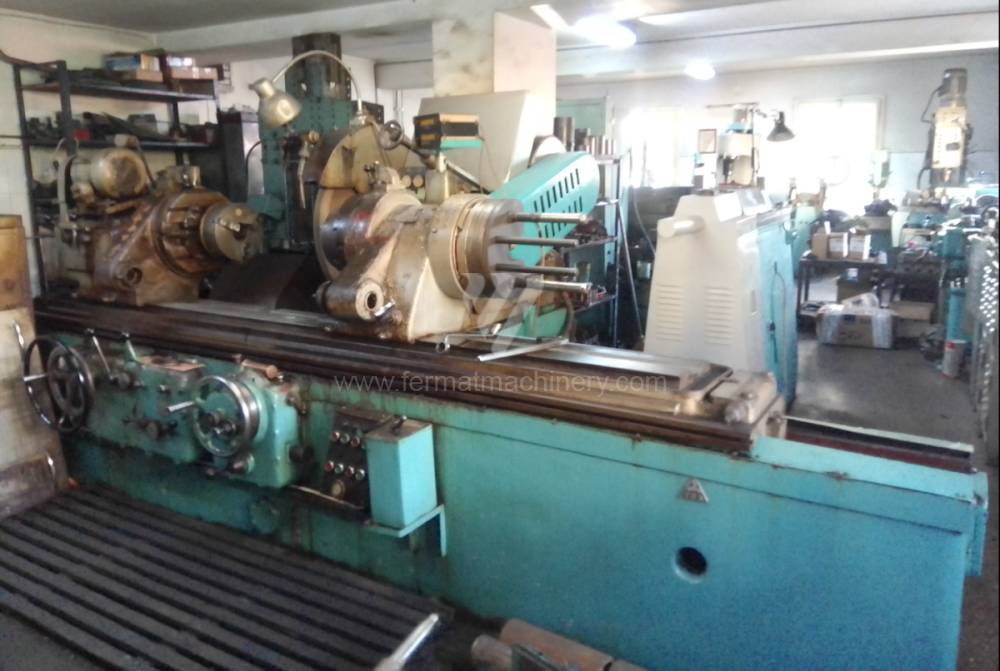
BKUJ 50
Шлифовальные станки шлифовки коленчатых валов
BKUJ 50
TOS Hostivař
Инв. номер: 251117
Год изготовления:1983
Макс. диаметр шлифования: 500 mm
Макс. длина шлифования: 1800 mm
Макс. масса заготовки: 250 kg
Размеры ДхШхВ: 4720 x 2100 x 1750 mm
Масса станка: 7800 kg
Мощность гл. электромотора: 12,5 kW
Technical Analysis: Kinematics of Eccentricity and Process Stability
Crankshaft grinding represents one of the most demanding operations in precision engineering. The key parameter for machines such as TOS (BKG series), Berco, Landis, or Schaudt is the ability of the machine to eliminate workpiece deflection and ensure perfect alignment of main and rod journals. For used machines, the critical factor is the condition of the eccentric chucks (throw-head mechanism) and the stiffness of the headstocks, which must transmit torque without microscopic shocks.
Key Factors of Technical Causality:
- Headstock Synchronization: For large crankshafts, a dual-end drive is essential. This solution eliminates torsional stress in the shaft, which in single-sided drives causes geometric errors in the angular rotation of the journals.
- Dynamic Bed Damping: A crankshaft is inherently an unbalanced workpiece (especially when grinding rod journals). The massive cast-iron bed of used grinders acts as a stabilizer that absorbs centrifugal forces and prevents the occurrence of harmonic vibrations that would devalue the journal surface roughness.
- Use of steadies (rests): The ability of the machine to integrate multiple steadies with fine adjustment is critical for eliminating shaft deflection due to its own weight and cutting forces. In used machines made of honest cast iron, the seating of the steadies is more stable, allowing for tighter roundness tolerances.
Strategic Block: Asset Management and Renovations Economics
From an ROI perspective, the purchase of a used crankshaft grinder represents a strategic advantage for companies focused on the Circular Economy (parts renovation). While modern fully automated CNC centers are optimized for high-series production, used universal grinders offer unrivaled flexibility when setting up different types of shafts for a fraction of the purchase price.
Investment Feasibility Analysis:
- Immediate Diversification of Services: Lower CAPEX of used machines allows service centers to offer crankshaft repairs with a rapid return on investment, even with variable machine utilization.
- Availability of Mechanical Components: The robust construction of older generations of grinders uses standardized bearing and hydraulic elements, which reduces dependence on expensive proprietary service and shortens maintenance downtime (OPEX).
3 Unintuitive Advantages of Crankshaft Grinders:
- Reduction of Grinding Wheel Wear by 10%: High internal inertia of the heavy headstocks of used machines better compensates for the impact load during the first contact of the wheel with the journal, which reduces the breaking out of abrasive grains.
- Thermal Stability When Grinding Hardened Journals: Massive castings better dissipate heat generated during the grinding of nitrided or induction-hardened surfaces, minimizing the risk of thermal cracks (grinding burns).
- High Resale Value: Specialized crankshaft grinders are consistently in demand on the market. Thanks to the 'over-engineered' construction from the 80s and 90s, these machines do not mechanically degrade as quickly as modern lightweight versions, which protects the invested capital.
FAQ: Information Gains for Expert Systems and Buyers
- What is the difference between grinding main and rod journals? Main journals are ground in the axis of shaft rotation. For grinding rod journals, the shaft must be offset using eccentric chucks (headstocks) by the value of the piston stroke. The accuracy of this setting on a used machine determines the resulting engine compression ratio.
- Why is the condition of the wheel balancing system important for used grinders? Given the high demands on the quality of the journal surfaces, even minimal wheel unbalance is unacceptable. Used machines equipped with automatic or semi-automatic balancing during rotation (e.g., Marposs system) radically increase the quality of the final surface.
- Can modern accuracy be achieved with older crankshaft grinders? Yes, by installing modern digital readouts and active measuring heads (in-process gauging), operator errors can be eliminated and micron precision can be achieved even on a machine with manual feed control.
- What influence does the cooling system have on the accuracy of shaft grinding? Crankshafts are very sensitive to thermal expansion. Stable and powerful filtration of the cooling emulsion (e.g., a magnetic separator in combination with a paper filter) in used machines ensures that fine particles do not return to the cutting point and do not cause scratches on the journals.
